
 Real Korean 1 – Everyday life & relationships1 of 11
Lesson 1
My day
Describe an ordinary day with times and sequence, and ask about other people's.
After Survival · A1+
You can talk about your life – your day, your job, your family, your plans – and ask about other people's.
Register interestCourse promise. You can talk about your life – your day, your job, your family, your plans – and ask about other people's. From situations to people.
Who it is for. Survival Korean alumni, or the equivalent level after a placement call.
Exit level. ACTFL Novice High, CEFR A1: your own simple sentences most of the time, follow-up questions. About 70 new chunks, 200 new words, eight grammar points in flow.
Grammar policy. One point per lesson, always introduced after you have tried to express it without it, always practised in speech, never in gap-fill. The tables are in the platform as reference, not homework.
Format. 10 × 75 min on Zoom, max 16 participants. Starts March 2027. Offered in week 6 of Survival Korean.
Price. Introductory price SEK 2,790 for the January–March 2027 cohorts. Regular price SEK 3,190 from April 2027. Alumni price SEK 2,690 for anyone who has completed a SeoulNova course. All prices include 25% VAT.
Every lesson is 75 minutes in six blocks, identical across courses: retrieval of chunks from earlier lessons, input (the mission presented as a situation, 6–10 chunks, a model dialogue recorded in Korea), pronunciation gym and drill, the mission in pods of 2–4 (round 1), a two-minute interlude where the teacher gives you one form to think about and you plan in silence, the same mission with a new partner and a complication (round 2), performance in the whole group and finally language focus and the can-do check. Lessons 1–4 build, lesson 5 is the halfway point (everything from lessons 1–4 again, with complications), lessons 6–8 build, lesson 9 is the dress rehearsal and lesson 10 is the final test. You spend 35 of the 75 minutes in a breakout room. No lesson is a lecture.
The method. The Speak First Method is task-based language teaching: chunks before rules, task repetition with a new partner and spaced retrieval across the weeks. We use 해요체 as the only speech level and let you speak without particles, just as Koreans do in everyday life. Grammar is explained only when the mission needs it.
Homework (15 min/day, in the platform): shadow the model dialogue, spaced repetition of chunks with audio, a 30-second micro-mission and an optional culture clip. No written grammar exercises.
Three measuring points: a 60-second recording before lesson 1 and after lesson 10 (same prompt), a can-do checklist with one statement per lesson that you tick off and the teacher confirms, and a 6-minute oral final test graded on task completion, intelligibility, language resources and fluency. Grammatical accuracy is not a criterion. You receive a course certificate with level, can-do list and test result, shareable as a link.
Real Korean 1 – Everyday life & relationships1 of 11Lesson 1
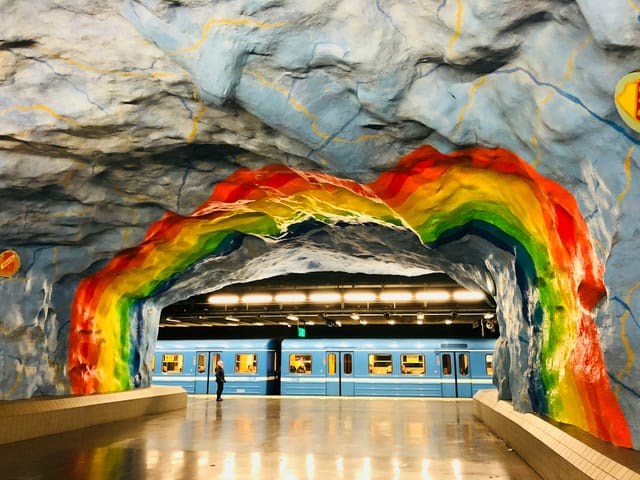
Describe an ordinary day with times and sequence, and ask about other people's.
 Real Korean 1 – Everyday life & relationships2 of 11
Lesson 2
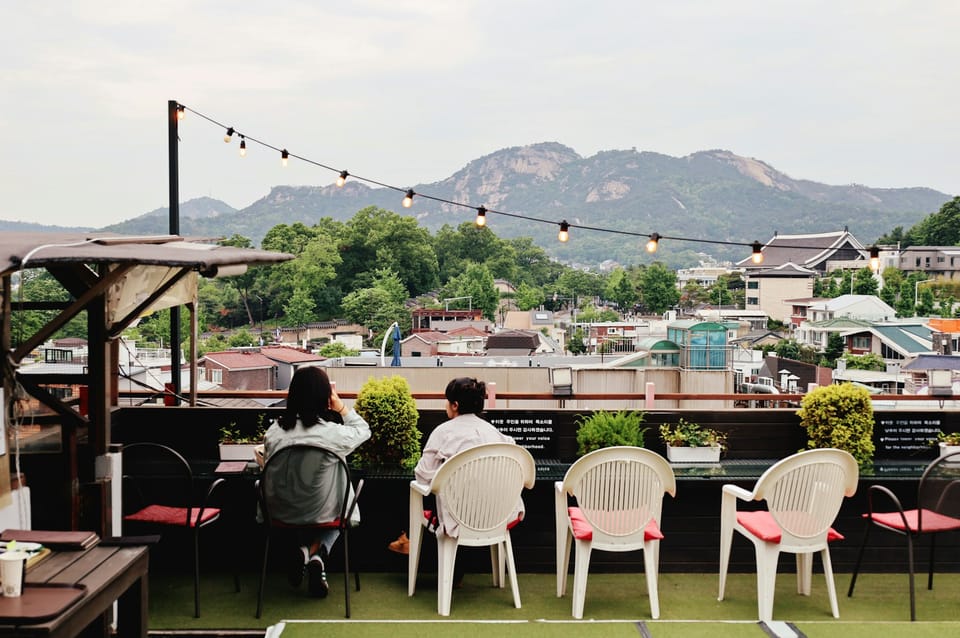
Explain what you do for a living and react to other people's jobs.
 Real Korean 1 – Everyday life & relationships3 of 11
Lesson 3
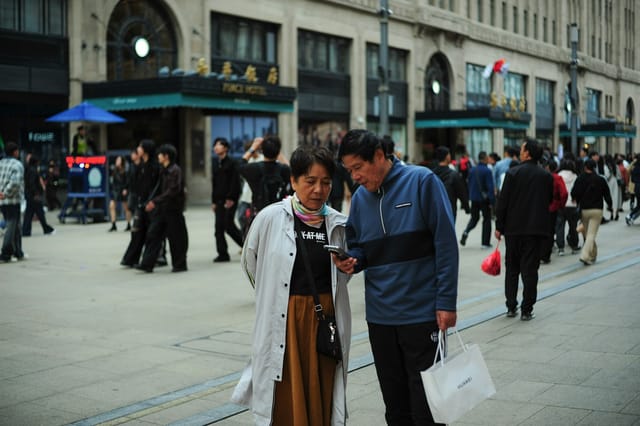
Describe your family and close friends: age, job, where they live, what they are like.
 Real Korean 1 – Everyday life & relationships4 of 11
Lesson 4
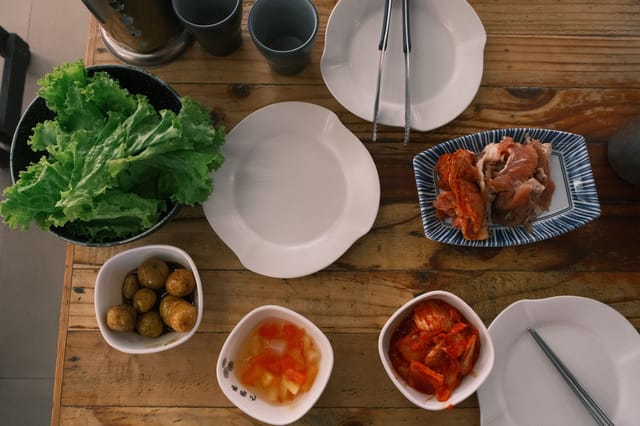
Tell what you did at the weekend in sequence and how it was.
 Real Korean 1 – Everyday life & relationships5 of 11
Lesson 5
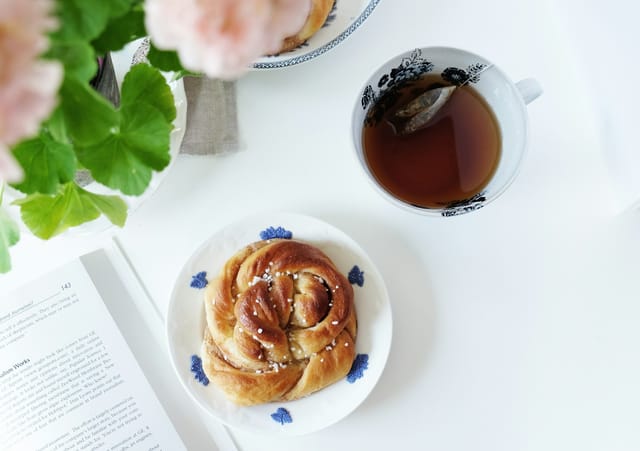
A six-minute fika about your day, your job, your family and your weekend: everything from lessons 1–4 as one conversation.
 Real Korean 1 – Everyday life & relationships6 of 11
Lesson 6
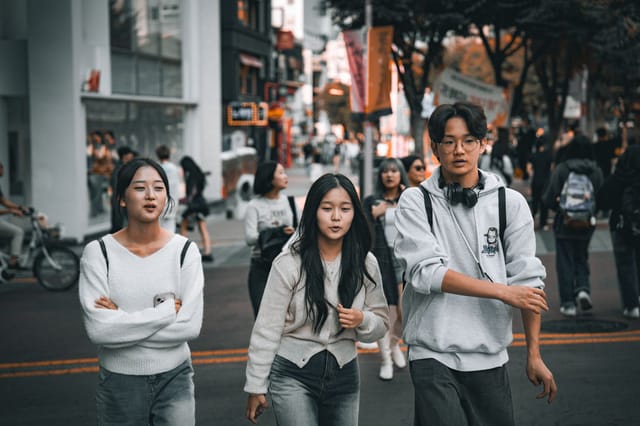
Talk about what you like and don't like, give a short reason and suggest something based on it.
 Real Korean 1 – Everyday life & relationships7 of 11
Lesson 7
Talk about plans and invite someone.
 Real Korean 1 – Everyday life & relationships8 of 11
Lesson 8
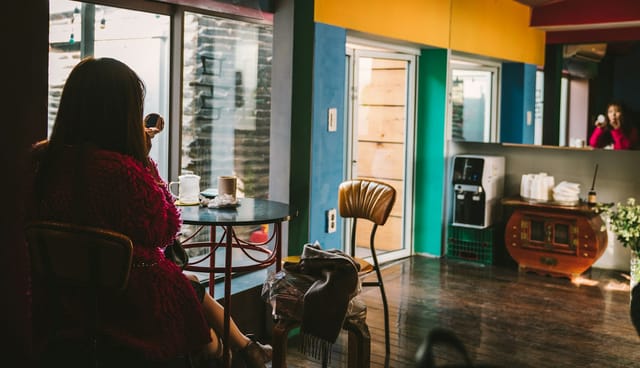
Ask how someone is, say how you feel and why, and offer simple comfort.
 Real Korean 1 – Everyday life & relationships9 of 11
Lesson 9
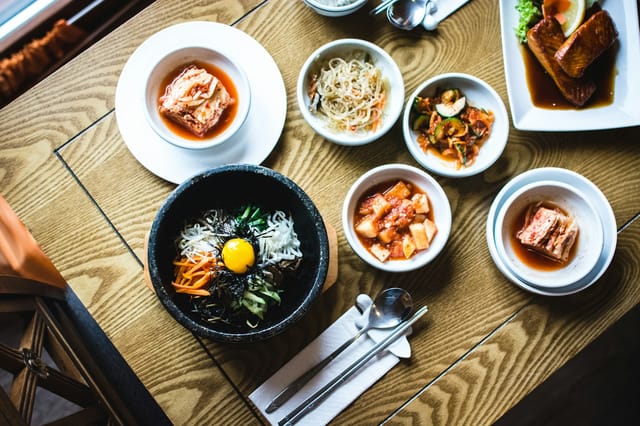
The dinner: eight minutes at the table about life, work, family and plans, in the final test's format.
 Real Korean 1 – Everyday life & relationships10 of 11
Lesson 10
The final test in pairs, your "after" recording and the certificate.
Real Korean 1 – Everyday life & relationships
Your turn
No sessions are open yet. Leave your e-mail and we will let you know when you can pick a time.
Register interestSituation. You meet a new colleague at the coffee machine and compare what your days look like.
Can-do. I can describe an ordinary day with times and sequence, and ask about other people's.
Key language. 일어나요 · 출근해요 · 점심 먹어요 · 퇴근해요 · 보통 · 보통 몇 시에 …?
Grammar in flow. Everyday verbs in 해요체. 에 for time, 에서 for place.
Pronunciation gym. Liaison (연음): the final consonant moves to the next syllable. 일어나요 is pronounced [이러나요], 점심 먹어요.
The mission. Compare daily schedules in pairs and find a time when you are both free.
Why. Your day is the topic you can talk about without preparing, and the clock from Survival comes back exactly when you need it.
Situation. A recruiter asks what you do, and you say enough for them to place you.
Can-do. I can explain what I do for a living in 4–5 sentences and react to other people's jobs.
Key language. 회사에서 일해요 · [area] 담당이에요 · 바빠요 · 재미있어요 · 힘들어요
Grammar in flow. -고 있어요 (in progress). -지만.
Pronunciation gym. Tense consonants ㄸ/ㅃ/ㅆ against plain ones: 바빠요, 쌀, 따요.
The mission. Talk about your job so that the recruiter can match you to one of three roles and say why.
Why. Four or five sentences in a row is the step from phrases to your own sentences, and the listener has a decision to make.
Situation. You show a picture of your family to someone who has never met them.
Can-do. I can describe my family and close friends: age, job, where they live, what they are like.
Key language. 언니 / 누나 / 오빠 / 형 · 동생 · 부모님 · 시부모님 · 살 · 착해요 · 재미있어요
Grammar in flow. Adjectives in 해요체. 보다 (than).
Pronunciation gym. ㅟ/ㅚ: 귀, 회사. ㅐ/ㅔ is not practised: Seoul speakers no longer distinguish them.
The mission. Describe a family so that your partner can draw the family tree without seeing the picture.
Why. Kinship words are the culture in miniature, age and gender sit in how you address people, and family is what in-laws ask about first.
Situation. Monday morning: someone asks what you did at the weekend, and you tell it in order.
Can-do. I can tell what I did at the weekend in sequence and comment on how it was.
Key language. -았/었어요 · 그리고 · 그런데 · 재미있었어요 · 피곤해요
Grammar in flow. Past tense in flow. Sequencing words.
Pronunciation gym. The past-tense ㅆ final before a vowel: 먹었어요 [머거써요], 갔어요.
The mission. Two suspects give the same weekend story, a police officer questions them and listens for differences.
Why. After three weeks in the present tense you need the past tense for real, and the alibi trains speaking, listening and memory in one task.
Situation. Fika with a new colleague from Busan: six minutes about your day, your job, your family and last weekend.
Can-do. I can make small talk for six minutes about my day, my job, my family and my weekend, and ask follow-up questions back.
Key language. Nothing new. Retrieval is ten minutes and mixes lessons 1–4.
Grammar in flow. Nothing new. Language focus takes the recurring mistakes from lessons 1–4.
Pronunciation gym. A mix from lessons 1–4.
The mission. Ask your way to four things about your colleague, one per topic, and answer the questions coming back.
Why. The first time lessons 1–4 become one conversation instead of four tasks, at the length of the final test. After the lesson the teacher checks your can-do list.
Situation. You are buying presents for three people and first have to find out what they like.
Can-do. I can talk about what I like and don't like, give a short reason, and suggest something based on it.
Key language. 좋아해요 / 안 좋아해요 · 제일 · 더 · -아서/어서 · 특히
Grammar in flow. -아서/어서 (reason). Superlatives.
Pronunciation gym. Nasalisation: ㄱ/ㅂ before ㄴ/ㅁ. 한국말 [한궁말], 입니다 [임니다].
The mission. Interview three profiles, which the pod plays in turn, and choose a present for each.
Why. The first lesson with "why": you get the tool for giving reasons only after you have tried without it.
Situation. Three friends plan a weekend in Busan: when, where, what you have to do and what it may cost.
Can-do. I can talk about plans and invite someone.
Key language. -(으)ㄹ 거예요 · -(으)ㄹ까요? · 같이 가요 · 언제 · 어디로
Grammar in flow. Future (-(으)ㄹ 거예요). Suggestions (-(으)ㄹ까요?).
Pronunciation gym. ㄹ + ㄴ → [ㄹㄹ]: 일 년 [일련], 설날.
The mission. Agree on a Busan weekend where everyone's must-dos fit the budget.
Why. Planning with a budget and must-dos is the task type that gives the most negotiation: everyone has to speak and give way.
Situation. A café conversation with a friend who seems to have something on their mind.
Can-do. I can ask how someone is, say whether I am tired, stressed or happy and why, and offer simple comfort.
Key language. 요즘 어때요? · 피곤해요 · 스트레스 받아요 · 기분이 좋아요 · 괜찮아요 · 힘내세요
Grammar in flow. Emotion adjectives. -아서/어서 again, now with a feeling as the reason.
Pronunciation gym. Intonation in statement versus question in 해요체: 피곤해요. / 피곤해요?
The mission. Eight minutes in pairs where each of you has a feeling card that has to come out in the conversation without being shown.
Why. The most personal lesson comes once the group knows each other, and the longest free turn so far prepares you for the dinner.
Situation. Dinner at a host's home: the conversation goes where the topic cards point.
Can-do. I can hold an 8-minute conversation at the dinner table about life, work, family and plans.
Key language. Everything from lessons 1–8.
Grammar in flow. Nothing new.
Pronunciation gym. Free alternation.
The mission. Keep the dinner conversation going for eight minutes while the host draws new topic cards.
Why. All the topics in a row, in an order the cards decide, is a review of the whole course. The teacher takes you through a 3-minute conversation in the final test's format and names one strength and one thing to work on before lesson 10.
Situation. The final test: six minutes in pairs with the teacher, in the format you have rehearsed twice.
Can-do. I can show that I talk about my life in my own sentences and ask about other people's.
Key language. Nothing new.
Grammar in flow. None.
Pronunciation gym. None.
The mission. While the pairs are tested: the dinner from lesson 9 again, with new topic cards and without the teacher.
Final test. Personal information, two role plays where you both answer and take the initiative, and a 30-second long turn after 30 seconds of preparation. Graded on task completion, intelligibility, language resources and fluency.
Why. The test measures what the course promises, your own sentences and follow-up questions, and the after recording next to the before recording is your proof. Then the certificate, Real Korean 2 at the alumni price and Speaking Club.
Michelle
Head teacher and course lead
No sessions are open yet. Leave your e-mail and we will let you know when you can pick a time.