
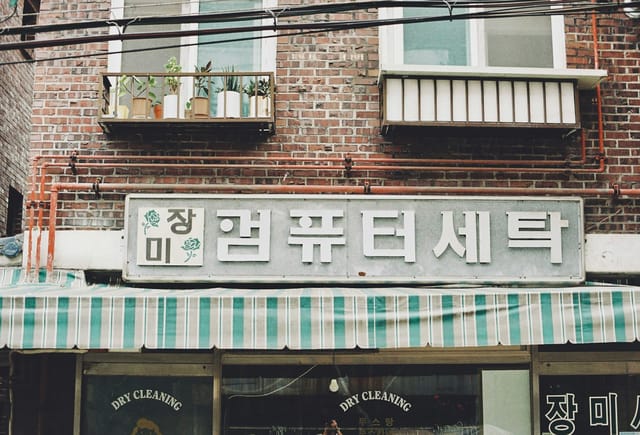
 Survival Korean1 of 12
Pre-course
The Hangul module
2–3 hours on your own before lesson 1: sound out any word within 90 minutes.

Beginner · towards A1
After 10 weeks you can get through a day in Seoul in Korean – with a recording that proves it.
Register interestCourse promise. After 10 weeks you can get through a day in Seoul in Korean: arrive, get around, order, shop, meet people, make plans and solve problems – and you have a recording that proves it.
You speak Korean from the first lesson. Ten lessons, eight real situations, at least 25 minutes of your own speaking per lesson in groups of 2–4. About 60 chunks, 150 active words and six grammar points on demand. Taught in English with material in Swedish and English.
Who it is for. The traveller, the culture enthusiast, the partner. No prior knowledge: you learn Hangul in the pre-course at home.
Exit level. ACTFL Novice Mid, on the way to CEFR A1 in spoken interaction: you can ask and answer simple questions on familiar topics with learned phrases, in eight situations.
What we do not promise. Not TOPIK 1 (needs 72–200 hours, we give 12.5). Not fluent reading. Not grammatical accuracy – we train intelligibility first.
Format. 10 × 75 min on Zoom, max 16 participants per cohort, speaking pods of 2–4. Starts Monday 25 January 2027, 10 weeks. Klarna: 3 × SEK 930. From April 2027: 3 × SEK 1,063.
Price. Introductory price SEK 2,790 for the January–March 2027 cohorts. Regular price SEK 3,190 from April 2027. All prices include 25% VAT.
The Korea-ready bundle. Survival Korean + Real Korean 1 together: SEK 5,190 (regular SEK 5,590 from April 2027).
Every lesson is 75 minutes in six blocks, identical across courses: retrieval of chunks from earlier lessons, input (the mission presented as a situation, 6–10 chunks, a model dialogue recorded in Korea), pronunciation gym and drill, the mission in pods of 2–4 (round 1), a two-minute interlude where the teacher names one thing that went well and one form to think about, the same mission with a new partner and a complication (round 2), performance in the whole group and finally language focus and the can-do check. Lessons 1–4 build, lesson 5 is the halfway point (everything from lessons 1–4 again, with complications), lessons 6–8 build, lesson 9 is the dress rehearsal and lesson 10 is the final test. You spend 35 of the 75 minutes in a breakout room. No lesson is a lecture.
The method. The Speak First Method is task-based language teaching: chunks before rules, task repetition with a new partner and spaced retrieval across the weeks. We use 해요체 as the only speech level and let you speak without particles, just as Koreans do in everyday life. Grammar is explained only when the mission needs it.
Homework (15 min/day, in the platform): shadow the model dialogue, spaced repetition of chunks with audio, a 30-second micro-mission and an optional culture clip. No written grammar exercises.
Three measuring points: a 60-second recording before lesson 1 and after lesson 10 (same prompt), a can-do checklist with one statement per lesson that you tick off and the teacher confirms, and a 6-minute oral final test graded on task completion, intelligibility, language resources and fluency. Grammatical accuracy is not a criterion. You receive a course certificate with level, can-do list and test result, shareable as a link.
Survival Korean1 of 12Pre-course
2–3 hours on your own before lesson 1: sound out any word within 90 minutes.
 Survival Korean2 of 12
Lesson 1
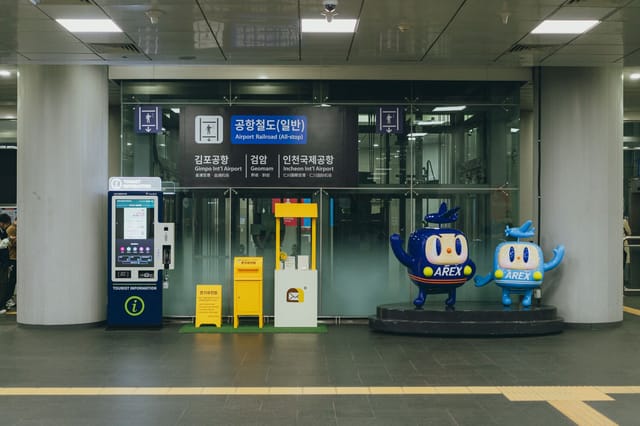
Passport control, hotel reception and the first meeting: greet, thank, say your name and ask for a repeat.
 Survival Korean3 of 12
Lesson 2
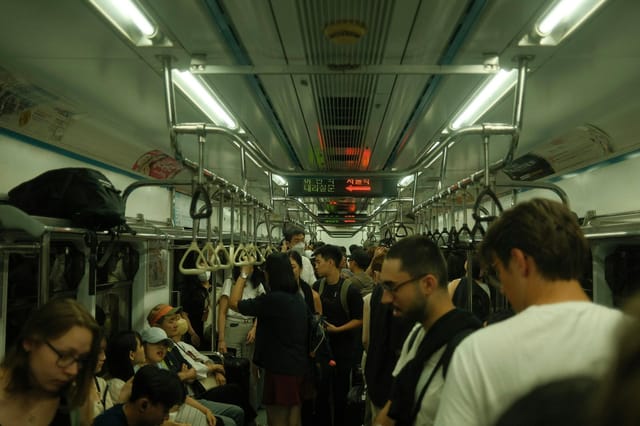
Taxi, subway and asking the way: say where you are going and understand the answer.
 Survival Korean4 of 12
Lesson 3
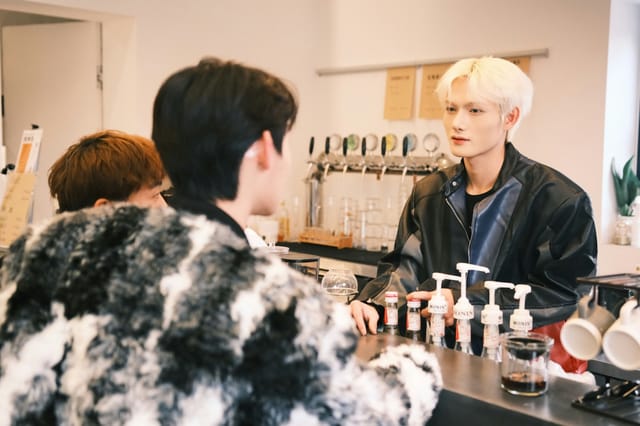
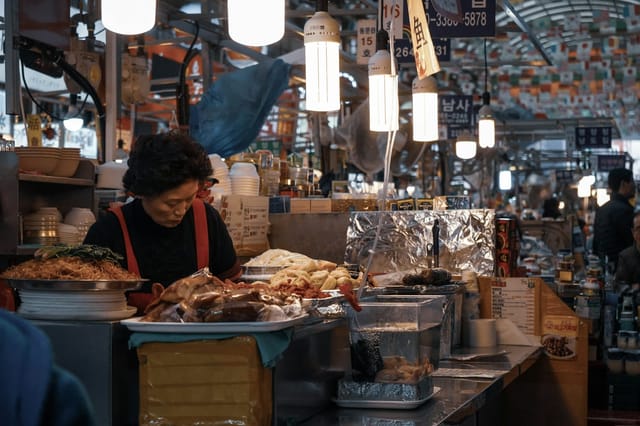
Restaurant, café and street food: order with quantities, ask for a recommendation, say "not spicy".
 Survival Korean5 of 12
Lesson 4
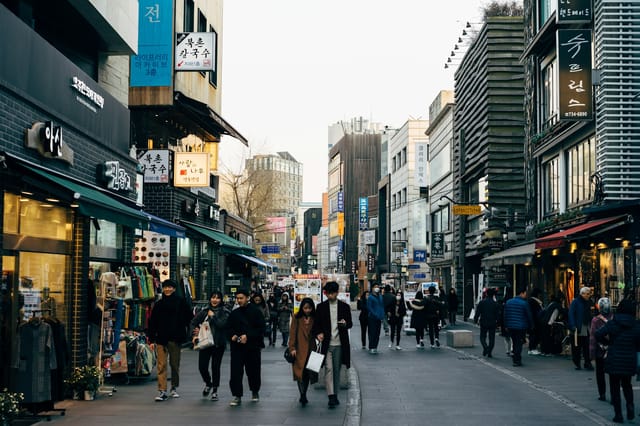
Olive Young, the market and the T-money card: ask what it costs and understand prices in thousands.
 Survival Korean6 of 12
Lesson 5
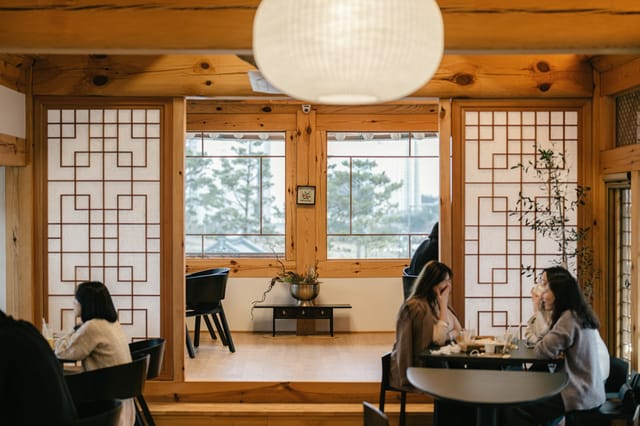
Lessons 1–4 in sequence as a morning in Seoul: hotel, taxi, café and shop, with complications.
 Survival Korean7 of 12
Lesson 6
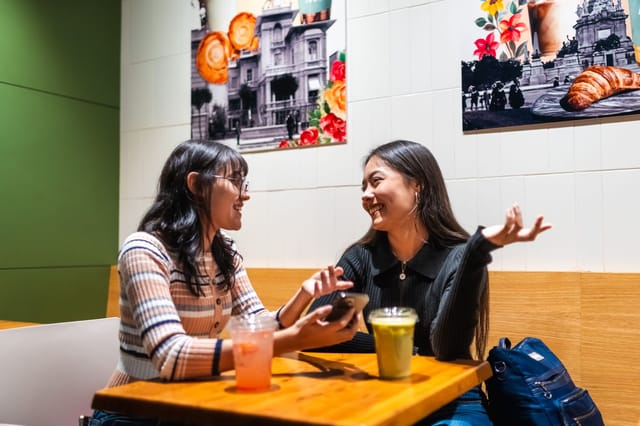
Dinner with friends of friends, a language café, the in-laws: say a little about yourself and ask back.
 Survival Korean8 of 12
Lesson 7
Arrange a dinner with friends: suggest a time and place, accept or decline politely, confirm.
 Survival Korean9 of 12
Lesson 8
Wrong order, lost bag, pharmacy and "I don't understand": solve it without English.
 Survival Korean10 of 12
Lesson 9
All eight situations in sequence with the teacher as the Korean, plus a free 3-minute conversation: the dress rehearsal.
 Survival Korean11 of 12
Lesson 10
The 6-minute oral test in pairs, your "after" recording and the certificate.

Survival Korean
Your turn
No sessions are open yet. Leave your e-mail and we will let you know when you can pick a time.
Register interestOpens when you buy the course and is done in the platform at your own pace: 14 consonants, 10 vowels and batchim (final consonants). The goal is to sound words out within 90 minutes, not to understand them.
The welcome mission. Record your name and 안녕하세요 – the first week's activity. Also make your 60-second "before" recording: say everything you can in Korean. You get it side by side with your "after" recording in week 10.
Hangul is not required for lesson 1. All material is also romanised up to lesson 3, after which the romanisation is phased out. Speaking never waits for reading.
Situation. Passport control, hotel reception, the first meeting.
Can-do. I can greet, thank, apologise, say my name and where I come from, and ask someone to repeat.
Chunks. 안녕하세요 · 감사합니다 · 죄송합니다 · 저는 [이름]이에요 · 스웨덴에서 왔어요 · 다시 한번 말해 주세요 · 천천히요 · 네 · 아니요 · 한국어 잘 못해요
Grammar on demand. [이름]이에요/예요. 해요체 is the only speech level.
Pronunciation gym. ㅓ versus ㅗ (서울, 오).
The mission. Check in at the hotel so that the receptionist finds the right booking by name and country.
Why. The repair phrases come before everything else, because they are what keeps a conversation alive when the rest is missing.
Situation. Taxi, subway, asking for directions.
Can-do. I can say where I am going, ask where something is, understand here, there, straight ahead, left and right, and ask the taxi to stop.
Chunks to say. [장소]에 가 주세요 · 여기요 · 저기요 · [장소] 어디예요? · 여기서 세워 주세요 · 얼마나 걸려요? · 멀어요?
Chunks to understand. 쭉 가세요 · 왼쪽으로 가세요 · 오른쪽으로 가세요 · 저기요 (pointing) · 가까워요 · 멀어요
Grammar on demand. 에 (to/at) as a chunk. 어디예요 as a fixed question.
Pronunciation gym. Unreleased batchim (밥, 국, 물): Swedish releases the final consonant, Korean closes it.
The mission. Take the taxi to the right hotel: say where you are going and arrive at the right number on the driver's map.
Why. Directions are something you hear, not say, so you train them the way drivers actually say them.
Situation. Restaurant, café, street food.
Can-do. I can order food and drink with quantities, ask what is recommended, say "not spicy", and understand the staff's standard questions.
Chunks. 이거 주세요 · [음식] 하나요 · 둘이요 · 몇 분이세요? → 두 명이요 · 뭐가 맛있어요? · 안 맵게 해 주세요 · 물 주세요 · 포장해 주세요 · 드시고 가세요?
Grammar on demand. Native Korean numbers 1–4 plus 개/명/잔. -(으)세요 is a listening chunk, not something you produce.
Pronunciation gym. 가/카/까 (가요 versus 카페): 가 low and soft, 카 high with air, 까 high and tense without air.
The mission. Order for the table so that the waiter can write the right receipt.
Why. Ordering comes as early as lesson 3 because it is the situation every traveller is guaranteed to end up in, and the one that gives the quickest feeling that it works.
Situation. Olive Young, market, T-money card.
Can-do. I can ask what something costs, understand prices in thousands, ask for another size or colour, pay by card and top up T-money.
Chunks. 얼마예요? · [숫자] 원이에요 · 비싸요 · 좀 깎아 주세요 · 다른 색 있어요? · 더 큰 거 있어요? · 카드 돼요? · 봉투 주세요 · 충전해 주세요 · 만 원
Grammar on demand. Sino-Korean numbers (일–십, 백/천/만) plus 원. 있어요/없어요.
Pronunciation gym. ㅡ (음, 크).
The mission. Buy three things at the market within a budget of 30,000 원.
Why. Prices are something you must understand quickly and say rarely, so the lesson trains listening to thousands more than the whole number line. The last lesson with romanisation.
Situation. Hotel reception, taxi, café, shop: lessons 1–4 in sequence, as a morning in Seoul.
Can-do. I can get from the hotel to a café and a shop in sequence, and manage when something goes wrong.
Chunks. None new. Retrieval is 10 minutes instead of 5 and mixes chunks from all four lessons.
Language focus. No new grammar. The two or three mistakes that have kept coming back in lessons 1–4.
Pronunciation gym. The contrasts the teacher has heard most mistakes on in lessons 1–4, mixed: one word at a time, and you say which contrast it was.
The mission. Do the morning's stations in sequence, hotel, taxi, café and shop, with a "Korean" who changes role per station.
Why. Retrieving the same phrases again after a few weeks, mixed and in a new order, holds better than moving on and reviewing everything at the end. Halfway we also check your can-do list.
Situation. Dinner with friends of friends, language café, in-laws.
Can-do. I can say a little about my job, my family and what I like, and ask the same questions back.
Chunks. 저는 [직업]이에요 · 스톡홀름에 살아요 · 가족은 네 명이에요 · [X] 좋아해요 · 무슨 일 하세요? · 취미가 뭐예요? · 한국 음식 좋아해요 · 정말요? · 저도요
Grammar on demand. 는/은 as topic marker, for understanding only. 좋아해요 versus 좋아요.
Pronunciation gym. Aspirated ㅋ/ㅌ/ㅍ in words (취미, 커피, 포도): high pitch plus strong air, now in every position.
The mission. Get to know the other two in the pod and find three things you have in common, without reading out your card.
Why. The first lesson where the mission is a conversation, not a transaction: 정말요? and 저도요 show that you are listening and keep the other person going.
Situation. Arrange to meet a friend, suggest a time and place, accept or decline.
Can-do. I can suggest a time and place, ask when someone is free, accept, decline politely and confirm.
Chunks. 내일 시간 있어요? · [요일] 어때요? · [시간] 시에 만나요 · 어디서 만나요? · 홍대 역에서요 · 좋아요! · 미안해요, 그때 안 돼요 · 그럼 모레는요? · 알겠어요
Grammar on demand. Telling the time: whole hours with native Korean numbers (한 시, 두 시 … 일곱 시) and 반 (half past). Minutes (분) for listening only. Weekdays. -(으)ㄹ까요? as a fixed question.
Pronunciation gym. Intonation in yes/no questions.
The mission. Find a day, a time and a place for a dinner that all three in the pod can make.
Why. The lesson keeps the time to whole hours and 반, so that the new thing is the planning, not the counting; saying no politely and suggesting something else is a conversation strategy, not a grammar point.
Situation. Wrong order, lost bag, pharmacy, "I don't understand".
Can-do. I can say that something is wrong, ask for help, describe a simple thing (colour, size, where), ask whether someone speaks English, and repair a misunderstanding.
Chunks. 이거 아니에요 · 잘못 나왔어요 · 도와 주세요 · 가방을 잃어버렸어요 · 검은색이에요 · 영어 하세요? · 무슨 뜻이에요? · 이거 먹어도 돼요? · 머리가 아파요 · 약 있어요?
Grammar on demand. 아파요 plus body part. 이/가 아니에요. Repair phrases.
Pronunciation gym. ㄹ as a flap between vowels and a lateral at the end (잃어버렸어요, 잘못, 서울).
The mission. You got the wrong thing: get the staff to understand what is wrong and put it right, without English.
Why. The last new situation is the one where no script is enough, and repairing in Korean instead of switching to English is the course's most important habit.
Situation. Continuous simulation: hotel, taxi, lunch, shopping, meeting a friend, plans, a problem, dinner.
Can-do. I can get through a whole day in Seoul in sequence, switch situations without losing the thread, and hold a 3-minute conversation.
Chunks. All sixty or so, reused. None new.
Language focus. No new grammar.
Pronunciation gym. Free switching between the contrasts from lessons 1–8.
The mission. Korea Day: five stations where the teacher or assistant is the Korean, 8 minutes each, one stamp in the passport per station. The last station is a free 3-minute conversation with the teacher in the final test's form, and you get one strength and one thing to work on before lesson 10.
Why. All eight situations in an order you do not choose is mixed retrieval of the whole course, and a dress rehearsal in the test's form means you walk into lesson 10 knowing exactly what is coming.
Situation. The final test: 6 minutes in pairs with the teacher, in the lesson or at a separate time. Personal information (1 minute), two role plays where you both answer and take the initiative (3 minutes) and a 30-second long turn after 30 seconds of preparation.
Can-do. I can show that I can get through a day in Seoul in Korean.
Chunks. None new.
Language focus. Nothing new. The lesson opens with 5 minutes of retrieval as usual, then the pairs are tested.
Pronunciation gym. None.
The mission. While the pairs are tested, the others do the Korea Day stations again in pods of three, with no teacher in the room.
Why. The test measures what we promise, task completion and intelligibility, not grammatical accuracy, and you get one strength and one thing to work on, not a score.
After lesson 10. Your 60-second "after" recording, the same prompt as before lesson 1, next to the "before". A certificate with your can-do list and the test's four bands, shareable as a link. Real Korean 1 at the alumni price and an invitation to Speaking Club.
Michelle
Head teacher and course lead
No sessions are open yet. Leave your e-mail and we will let you know when you can pick a time.